
Contents:
- Why Understanding Tipping Matters
- The Basics: What Pre-Bonded Hair Extensions Are
- What Keratin Tips Are Made Of
- Common Tip Shapes
- How Strands Are Tipped at Manufacture
- Intermediate Level: How Re-Tipping Works
- The Re-Tipping Process
- What Re-Tipping Costs in Length
- How Many Times Can Hair Be Re-Tipped?
- Tipping and Micro Bonds: How Size Changes the Process
- A Real-Life Example: A Parent’s Practical Choice
- The Chemistry of a Good Bond
- Why Keratin Releases Again
- Anatomy of a Strand: What to Inspect Before Re-Tipping
- Salon Re-Tipping vs Buying New Strands
- Colour Fading and Re-Tipping
- How to Care for Pre-Bonded Hair Between Re-Tips
- Washing
- Brushing
- Heat
- Sleep
- Workouts and Swimming
- Real-Life Example: A Busy Professional’s Year
- How Often Should You Book a Move-Up?
- Advanced Nuances: What Separates Good Tipping From Poor
- Keratin Quality
- Tip Weight
- Heat Control
- Re-Tipping by Hand vs Machine
- Regional Differences: How Climate Affects Pre-Bonded Sets
- A Seasonal Timeline for Pre-Bonded Hair
- The Role of a Specialist Salon
- Cost Guide for 2026
- Choosing Between Tip Types for Your Hair
- Flat Tips for Fine Hair
- U-Tips for Speed and Grip
- Mini Tips for Hairlines and Short Hair
- Reading a Quote for Pre-Bonded Sets
- Fitting Pre-Bonded Hair Around a Busy Life
- Environmental and Ethical Questions
- Troubleshooting Tip Problems
- Tips That Slip
- Tips That Feel Rough or Flaky
- Tips That Show Through the Hair
- Tangling at the Tip
- Frequently Misunderstood Points
- “Pre-Bonded Means Permanent”
- “Re-Tipping Is a Sales Trick”
- “Any Salon Can Do It”
- Next Steps: Planning Your First Set
- A Closer Look at Tipping History
- Which Hair Types Suit Pre-Bonded Extensions
- Standard, Micro and Nano Tips Compared
- Preparing for a Re-Tipping Appointment
- Common Mistakes
- Frequently Asked Questions
- What does pre-bonded mean?
- How many times can extensions be re-tipped?
- Does re-tipping damage the hair?
- Can I re-tip hair at home?
- How long does a re-tipping appointment take?
Pre-bonded hair extensions owe their existence to an old problem that every wig-maker, hairdresser and stage performer has faced: how do you fasten borrowed hair to a living head without ruining either? For centuries the answers were crude. Wax, resin, pins and stitching held hair in place for an evening, but never for months. It took the salons of late-twentieth-century Europe, with their hot tools and a growing market for natural-looking length, to settle on a bead of keratin, the same protein that hair is made from, as the fastener of choice.
That small bead, applied to the end of each strand before it ever reaches your salon chair, is called a tip. This guide explains how strands are tipped, how they are re-tipped when the hair is reused, what separates a good tip from a poor one, and how to plan the whole thing across a year.
Why Understanding Tipping Matters
For a busy parent or a young professional, an extension set is a significant purchase, and the part that decides its lifespan is the one you never see: the tip. A well-made tip releases cleanly from the hair, bonds firmly to your own strands and can be removed and replaced several times. A poorly made one is brittle, uneven or contaminated, and causes slipping, tangling and early replacement.
Knowing how tipping works helps you ask better questions, judge quotes and understand why a salon charges for a service called “re-tipping”. It also explains why some sets last a year or more while others struggle through three months.
The Basics: What Pre-Bonded Hair Extensions Are
The phrase simply means hair that arrives with a bonding tip already attached. Each strand, usually weighing between 0.5 and 1 gram, has a small cylinder of keratin at one end. The stylist places that tip against a section of your natural hair, applies heat from a bonding tool to soften it, and rolls it flat so it grips both hairs. Once it cools, it sets.
These strands are the foundation of the systems sold as pre-bonded hair extensions, in micro, nano and standard sizes. The word “pre-bonded” is used to separate them from other systems, such as tape-ins or wefts, where the attachment is made during the appointment with adhesive or thread.
What Keratin Tips Are Made Of
The tip is a blend of keratin protein, binding agents and sometimes a small amount of colouring so it blends with the hair shade. Quality varies. Good tips are softened by moderate heat, around 150 to 190°C, stay flexible when cool and release when treated with a keratin-softening solution. Poor ones contain too much filler, melt unevenly or become brittle in cold weather.
Common Tip Shapes
- Flat tips: a flat, rectangular bead that lies close to the scalp. Popular for its low profile.
- U-tips: a rounded bead with a groove for the natural hair to sit in, giving an easy and quick application.
- I-tips: a straight, cylindrical bead, used mostly with micro rings.
How Strands Are Tipped at Manufacture
Tipping begins long before a salon fitting. The process in a good workshop follows several careful stages.
- Sorting: raw hair is sorted by length and direction. Cuticle alignment, with all the scales running from root to tip, is vital, as it prevents tangling.
- Washing and treating: the hair is cleaned, and in some cases lightly processed to the target colour or texture.
- Portioning: hair is divided into small bundles, each with the weight of a single strand, typically 0.5 to 1 gram.
- Tipping: a measured amount of keratin is melted onto the root end of the bundle and shaped into a tip by hand or machine.
- Cooling and quality check: the strands are cooled, checked for even tips and any defects, and graded.
- Packing: strands are packed in lengths, shades and textures, ready for the salon.
The difference between a well-made strand and a poor one is mostly in steps 1 and 4. Mixed cuticles tangle after a few washes, and uneven tips cause slipping. Reputable suppliers will tell you how they handle both.
Intermediate Level: How Re-Tipping Works
When a set is moved up or reused, the old tips need to be replaced. Over time, a tip softens, picks up product and loses its grip, and the strand needs a fresh one. This process is called re-tipping, and it is what makes extension hair a reusable asset instead of a disposable one.
The Re-Tipping Process
- Removal: the old bond is softened with a keratin-removal solution and gently crushed, then slid off the natural hair.
- Cleaning the strand: the old keratin is removed from the extension, either by peeling or by trimming the tip end.
- Inspection: the stylist checks the strand for dryness, damage and tangling, and discards any that are worn.
- Re-tipping: new keratin is melted onto the root end and shaped into a fresh tip.
- Cooling and sorting: the strands are sorted for length and re-bonded onto the regrown hair.
What Re-Tipping Costs in Length
Each re-tip can cost the strand a few millimetres, because removing old keratin sometimes means trimming. A strand that begins at 50 cm might lose 0.5 to 1 cm each time. After three or four re-tips, the length drops noticeably, and the hair may be best used for a shorter style. A good stylist will tell you when a strand has reached that point.
How Many Times Can Hair Be Re-Tipped?
High-quality, cuticle-aligned human hair can usually be re-tipped three or four times, giving a total of six to twelve months of wear. Lower-quality hair may last only one or two cycles. Condition, care and the number of washes all play a part. Strands that are matted, dry or heavily bleached are better retired.
Tipping and Micro Bonds: How Size Changes the Process
Tip size determines how visible the bond is and how suited it is to your hair. Smaller tips need more precise application, and often more strands.
The micro bonded extensions approach uses a smaller tip than the standard method, which suits fine or medium hair. Nano tips are smaller still. Each strand carries less hair, so a full set uses more strands, but the result is lighter and easier to hide. A salon that offers several sizes can match tip size to hair type, instead of using one size for every client.
A Real-Life Example: A Parent’s Practical Choice
One client, a mother of two working part-time as a physiotherapist, wanted length without a daily styling routine. Her hair was fine and medium-length, and she worried about the weight. The stylist chose micro-sized tips with 120 strands, spaced to avoid tension at the hairline.
At her second move-up, ten weeks later, the stylist re-tipped the same strands, checked the condition of each and replaced about a dozen that had worn. The cost of the move-up was a fraction of the original set, and her hair had grown enough that she could request a few extra strands for volume. By the end of the year she had spent far less than a second set would have cost, and the hair was still in good condition.
The Chemistry of a Good Bond
It helps to picture what is actually happening on a microscopic level. Keratin is a fibrous protein that softens when heated and hardens again as it cools, a property known as thermoplasticity. When the bonding tool warms the tip, the protein chains loosen enough to flow around the natural hair and the extension strand. When the tip cools, the chains lock into a solid mass, gripping the hair mechanically rather than chemically. There is no glue in the usual sense, and no chemical reaction with the hair.
This is the reason temperature control matters so much. Too cool, and the tip does not flow, leaving a rough, weak bond. Too hot, and the keratin chars or the hair is scorched. The sweet spot lies in a narrow range, and an experienced fitter learns to judge it by feel and appearance as well as by the dial.
Why Keratin Releases Again
The same property that lets the bond harden also allows it to be softened again. A keratin-removal solution, usually a gentle alcohol-based gel, loosens the protein just enough for the bond to be crushed and slid free. This is why bonded extensions can be removed without cutting or pulling the natural hair, and why re-tipping is possible at all. Glued or taped systems rely on adhesives that are harder to reverse cleanly.
Anatomy of a Strand: What to Inspect Before Re-Tipping
A thoughtful stylist examines each strand before deciding whether to reuse it. Five checks cover most of what matters.
- Cuticle direction: run a finger from tip to end and back. Smooth in one direction and rough in the other is a good sign. Equal roughness both ways suggests mixed cuticles.
- Elasticity: a gently stretched strand should spring back. Snapping or stretching permanently means the hair is worn.
- Shine and texture: dull, straw-like hair has lost its moisture and will not recover fully.
- Tangle level: a strand that knots easily at the roots will cause problems again.
- Length remaining: if too many millimetres have been lost, the strand may no longer match the others in the set.
Strands that fail two or more checks are usually set aside. Reusing them saves little money and risks the look of the whole set.
Salon Re-Tipping vs Buying New Strands
Is it better to re-tip or to buy fresh? The answer depends on the condition of the hair and the price difference.
- Re-tip when: the hair is smooth, strong and shiny, and the strands are at least 40 to 45 cm long. The cost of labour is much lower than new hair.
- Buy new when: a large proportion of strands show wear, the length has dropped too far, or you want a different colour or texture.
- Mix both: replace a fraction of worn strands with new ones while re-tipping the rest. This is a common and economical approach.
The mixed approach works best when the new strands match the old in colour, length and texture, which is another argument for buying from the same supplier each time.
Colour Fading and Re-Tipping
Extension hair fades with sun, washing and heat, and the roots of each strand, where the tip sits, are often a different tone from the ends. When strands are re-tipped, the stylist can also refresh the colour. A gloss or toner brings back shine and unifies the shade across the set. Dyeing darker is generally safe, while dyeing lighter is limited, since extension hair is usually already processed.
How to Care for Pre-Bonded Hair Between Re-Tips
The aim is to reach the re-tipping appointment with strong tips and healthy hair. Everyday habits make the difference.
Washing
Wait 48 hours after the first fitting. Then wash every three to four days, using a sulphate-free shampoo on the scalp and a light conditioner on the lengths. Keep conditioner and oils away from the tips.
Brushing
Use a loop brush or a soft extension brush. Hold the hair above the bonds with one hand and brush from the ends upwards. Brush morning and evening, and always before washing.
Heat
Keep hot tools at least two centimetres from the bonds. Use a heat protectant and temperatures below 180°C. Never clamp a straightener onto a tip.
Sleep
Braid loosely or use a silk scrunchie. Avoid sleeping on wet hair, since damp roots loosen tips and tangle.
Workouts and Swimming
Tie hair loosely. Rinse after the gym and after swimming. Chlorine and salt water dry out the keratin and the hair, so rinse promptly and condition the lengths.
What the Pros Know: Feel the tips every couple of weeks. A healthy tip is smooth and slightly flexible. A tip that feels gritty, flaky or rough has taken on product or is starting to degrade, and it is worth mentioning at your next appointment.
Real-Life Example: A Busy Professional’s Year
A project manager in her late twenties had a nano set fitted in January with 150 strands of 50 cm hair. She worked long days, went to the gym four times a week and travelled twice for work. At her first move-up in March, the stylist re-tipped all strands and trimmed about half a centimetre from a handful. At the second, in May, she replaced 12 strands that had worn after a holiday in Spain. By July, she had changed her gym routine to avoid sweat build-up and the hair looked as good as at the beginning.
In September, the set was re-tipped for the third time, and the stylist suggested trimming the whole set by 2 cm to refresh the ends. In November, they assessed the strands and decided about two thirds could be used for a final cycle. Her total spend for the year was less than the cost of two sets, and the hair stayed natural-looking throughout. The key was planned maintenance at the right intervals, the sort of schedule that a specialist such as Ivana Farisei sets out at the first appointment.
How Often Should You Book a Move-Up?
The general rule is every eight to twelve weeks, depending on bond size and hair growth. Micro bonds, which carry less weight, sit comfortably at the longer end of that range. Nano bonds are best moved up closer to eight to ten weeks, since the smaller grip area loosens sooner. If your hair grows quickly, expect the shorter interval. If you notice that bonds sit more than 2 to 3 cm from the scalp, book sooner.
Missing a move-up is more costly than it seems. Bonds that have drifted too far tangle and mat, and the stylist needs extra time to detangle the hair. In severe cases, natural hair is lost and strands become unusable. Setting a calendar reminder at the time of the fitting solves the problem.
Advanced Nuances: What Separates Good Tipping From Poor
Keratin Quality
Good keratin softens at a consistent temperature and bonds firmly without charring. Poor keratin has an unpredictable melting point, which leads to uneven bonds and burnt tips. Ask the stylist what keratin they use and where it comes from.
Tip Weight
A tip that is too heavy pulls on the natural hair. A tip that is too light slips. The ideal weight depends on strand thickness and the strength of your hair. Fine hair needs lighter tips; thick hair can carry more.
Heat Control
Excess heat damages both the keratin and the hair. A professional bonding tool has a controlled temperature, and a skilled fitter works quickly, applying heat for only a few seconds per bond. Overheating makes bonds brittle and increases the risk of breakage.
Re-Tipping by Hand vs Machine
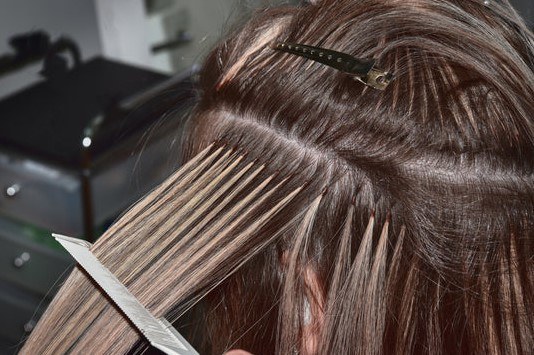
Hand re-tipping allows the stylist to inspect each strand and adjust the tip size. Machine re-tipping is faster and cheaper but can be less precise. Specialist salons usually prefer hand work for quality.
Regional Differences: How Climate Affects Pre-Bonded Sets
- Northeast: cold and dry in winter. Keratin can become brittle in low temperatures, and static from indoor heating increases tangles. Warm the hair gently before brushing and use moisturising products.
- South: heat and humidity. Tips may soften slightly in very hot conditions, such as in a car on a summer day. Avoid leaving hair under direct sun or in hot cars, and keep the scalp clean to prevent product build-up.
- West Coast: sun, salt and chlorine. Wet hair and rinse thoroughly after swimming, and protect the hair from strong sunlight.
In the UK, the weather swings between damp and dry, and central heating adds to the dryness. A consistent routine matters more than any single product.
A Seasonal Timeline for Pre-Bonded Hair
Planning the year around the seasons helps manage care and cost.
- January to March: a quiet period for many salons. Good time for a fitting, with several weeks of cool weather to settle in. Use richer conditioners.
- April to June: first move-up. Hair grows faster in spring for many people. Prepare for holidays and weddings with a trim.
- July to September: sun, swimming and holidays. Rinse after the pool, use UV protection and book a move-up before travel.
- October to December: party season. A refresh with re-tipping and a gloss gives a polished look. Check the condition of the hair and decide whether to retire any strands.
The Role of a Specialist Salon
Tipping and re-tipping are skills, and the quality varies a great deal. At Ivana Farisei, the team works with pre-bonded strands every day, tips and re-tips in the salon, and assesses each strand before reuse. This approach means the hair is reused only when it is in good condition, and clients are told honestly when it is time to replace it.
Ivana Farisei keeps the whole chain in one place, from inspection to re-tipping to fitting. Having tipping done by the same people who fit your hair also reduces the chance of mismatched tips or poor-quality keratin. The fitting and re-tipping are consistent, and any problems can be traced to a clear cause.
Cost Guide for 2026
Prices vary by salon and hair quality. As a broad UK guide:
- Pre-bonded hair (full set): roughly £250 to £800.
- Fitting: roughly £150 to £400.
- Move-up with re-tipping: roughly £100 to £250.
- Removal only: roughly £60 to £150.
- Aftercare products: roughly £40 to £100.
These are indicative ranges and not a quote. Ask for a written estimate that spells out what is included.
Choosing Between Tip Types for Your Hair
The shape of the tip influences comfort, visibility and how the bond behaves over time. Most salons offer one or two types, but a specialist can explain the differences and match them to your head.
Flat Tips for Fine Hair
A flat tip spreads the weight along a wider area, which can feel lighter on the scalp. It lies close to the head and is easier to hide under fine hair. The trade-off is that it takes slightly longer to apply, and it needs careful alignment to avoid looking bulky.
U-Tips for Speed and Grip
U-tips have a groove that cradles the natural hair, which makes the fitting quicker and the grip secure. They suit medium to thick hair well. On very fine hair, they may feel more noticeable.
Mini Tips for Hairlines and Short Hair
Smaller tips around the hairline and nape avoid pulling and are less visible. Many stylists use a mix of sizes in one set, with the smallest at the front and the standard at the back.
Reading a Quote for Pre-Bonded Sets
Quotes for pre-bonded work can look similar while covering very different things. A careful comparison saves frustration.
- What hair is included? The number of strands, the length, the origin and whether cuticles are aligned.
- What is the fitting price? Some quotes combine hair and labour, others separate them.
- What does a move-up cost? This is the recurring cost that matters most.
- Is re-tipping included? Some salons include it in the move-up, others charge extra per strand.
- What is the guarantee? A good salon will refit or repair early slippage at no charge.
At Ivana Farisei, the quote separates hair, fitting, move-ups and re-tipping, so you can see where the money goes and what you will pay in month three, not just on day one. Clear numbers make planning easier for families and busy professionals, who need to fit extensions into a household budget.
Fitting Pre-Bonded Hair Around a Busy Life
For a young family or someone with a demanding job, scheduling is as important as the hair. A fitting takes two to four hours, and move-ups take about two to three. Booking these in advance, ideally on quiet days, makes the routine manageable.
- Childcare: book fittings during school hours or when a partner can cover. Ask whether the salon has a quiet space for a baby or older child.
- Work: choose appointment days that do not clash with presentations or travel. Allow a day of adjustment after the first fitting.
- Money: some salons offer payment plans for the first fitting. Ask before assuming you must pay in full.
- Routine: a five-minute morning routine of gentle brushing and a satin bonnet at night are enough for most people.
Environmental and Ethical Questions
Tipping and re-tipping make extensions more sustainable, because the same hair is used more than once. A set that lasts a year or more has a smaller footprint than several sets of cheaper hair. Beyond reuse, a few questions are worth asking about the hair itself.
- Where does the hair come from, and how are donors treated?
- How is the hair processed, and are the chemicals safe?
- Does the salon recycle keratin offcuts, tips and packaging?
- Are removal solutions biodegradable?
Reputable salons answer these openly. Vague or evasive answers are a reason to choose elsewhere.
Troubleshooting Tip Problems
Tips That Slip
If tips slide down the hair within weeks, the cause is usually oil or conditioner near the bond, a tip that was too cool when applied, or a bond size too large for the hair. Visit the salon for a check, and do not push them back up yourself.
Tips That Feel Rough or Flaky
This is often product build-up or low-quality keratin. A clarifying wash on the scalp area and a check by the stylist usually solve it. If the keratin itself is degrading, the strand may need re-tipping.
Tips That Show Through the Hair
Visible tips mean the bonds have moved too far from the scalp or are too large for the hair. A move-up or a switch to smaller tips fixes it.
Tangling at the Tip
Tangles at the tip mean brushing technique or sleeping habits need adjusting. Hold the hair above the bond when brushing, and braid at night. If tangles persist, ask your stylist to check for cuticle damage.
Frequently Misunderstood Points
“Pre-Bonded Means Permanent”
It does not. The bonds last eight to twelve weeks before they need to be moved up, and the whole system can be removed in a single appointment.
“Re-Tipping Is a Sales Trick”
It is a genuine service that lowers the cost of wearing extensions. The trick lies in the quality of the strand: a salon that re-tips poor hair is wasting your money, and one that tells you honestly when to stop is protecting it.
“Any Salon Can Do It”
The tools are widely available, but the skill is not. Heat control, tip shaping and strand inspection take years to master. A salon that does it daily will produce more consistent results.
For anyone still choosing, a consultation with Ivana Farisei is a low-pressure way to see tips, strands and tools up close, and to ask the questions listed above before any money changes hands.
Next Steps: Planning Your First Set
- Decide on your goal: length, volume or both.
- Check your hair length and strength with a professional consultation.
- Choose a bond size to suit your hair.
- Ask for a full written quote, including re-tipping and move-ups.
- Book the fitting at a quiet time of year and plan the move-up calendar.
- Buy a small aftercare kit and learn the routine before the appointment.
The best results come from understanding the system you are buying into. Pre-bonded hair is a long-term arrangement between your hair, the strands and a skilled fitter, and each part matters.
A Closer Look at Tipping History
The idea of attaching hair at the root is older than the technology that made it practical. Early hairdressers experimented with beeswax, shellac and pine resin, which softened in the heat of the day and failed in the cold. The turning point came when professional hair tools became precise enough to heat a small bead of material to a specific temperature, and when protein-based adhesives were developed that could be removed without harming the hair.
From the 1990s, fusion systems spread through European and American salons, first as a luxury for stage and screen, then as an everyday service. As suppliers learned how to align cuticles, grade hair by length and improve the consistency of keratin, quality rose and prices gradually fell. Today, pre-bonded strands are one of the most common methods in the UK, and the main differences between providers lie in the skill of the fitter and the care taken over the hair.
Which Hair Types Suit Pre-Bonded Extensions
- Medium to thick hair: the easiest to work with. Standard or micro tips hide well and need fewer strands.
- Fine hair: suitable with nano tips and a modest number of strands. Over-loading is the main risk.
- Curly and coily hair: works well when the texture of the strands matches the natural curl pattern.
- Short hair: needs at least 10 to 12 cm for a secure bond.
- Damaged or very dry hair: better to restore its condition before fitting. Weak hair cannot support the weight of a bond.
A consultation is the best way to confirm which category you fall into. A responsible stylist will test strength and discuss lifestyle before suggesting a tip size.
Standard, Micro and Nano Tips Compared
The three sizes give a useful spectrum, and the right one depends on your hair and goals.
- Standard tips: the largest and strongest. Best for thick hair and for people who want maximum durability. Fewer strands are needed, but they are more visible on fine hair.
- Micro tips: a flexible middle size, popular for medium hair. They balance discretion and grip.
- Nano tips: the smallest. Ideal for fine or short hair, and for styles that show the parting. They need more strands and a longer appointment.
The right choice is rarely the smallest or the largest, but the one that matches the hair underneath.
Preparing for a Re-Tipping Appointment
- Wash your hair two days before, so the scalp is clean but not freshly oiled.
- Brush gently and remove any tangles you can reach without pulling.
- Note any bonds that feel loose, sore or visible, and tell your stylist.
- Bring a photo of your hair as it looked at the last appointment to compare.
- Allow plenty of time, since inspecting and re-tipping strands is a careful process.
Arriving prepared speeds up the appointment and helps the stylist decide which strands to reuse.
Common Mistakes
- Re-tipping too many times. After four cycles, strands are shorter and weaker. Retire them.
- Using cheap, mixed-cuticle hair. It tangles and cannot be reused.
- Ignoring tip size. Large tips on fine hair cause breakage.
- Heat on the bonds. Straighteners and curling irons soften keratin and loosen the hold.
- Oils near the tips. Oils soften the keratin and cause slipping.
- DIY removal. Pulling bonds off causes breakage and wrecks the strand.
Frequently Asked Questions
What does pre-bonded mean?
It means each strand arrives with a keratin tip already attached, ready to be fused to your own hair with heat.
How many times can extensions be re-tipped?
Good hair can usually be re-tipped three or four times. Lower-quality hair may last only one or two.
Does re-tipping damage the hair?
Not when done properly. Each re-tip may cost a few millimetres of length, but the hair itself is unharmed if handled gently.
Can I re-tip hair at home?
Not advisable. The process needs the right tools, temperature control and experience. A failed attempt can ruin the strands.

How long does a re-tipping appointment take?
A move-up with re-tipping usually takes two to three hours, depending on the number of strands.